Our Cleaning Process
Professional gutter cleaning is more than scooping out leaves. We clear the system, test it, and check for problems that are easy to fix now but expensive to ignore.
Debris Removal
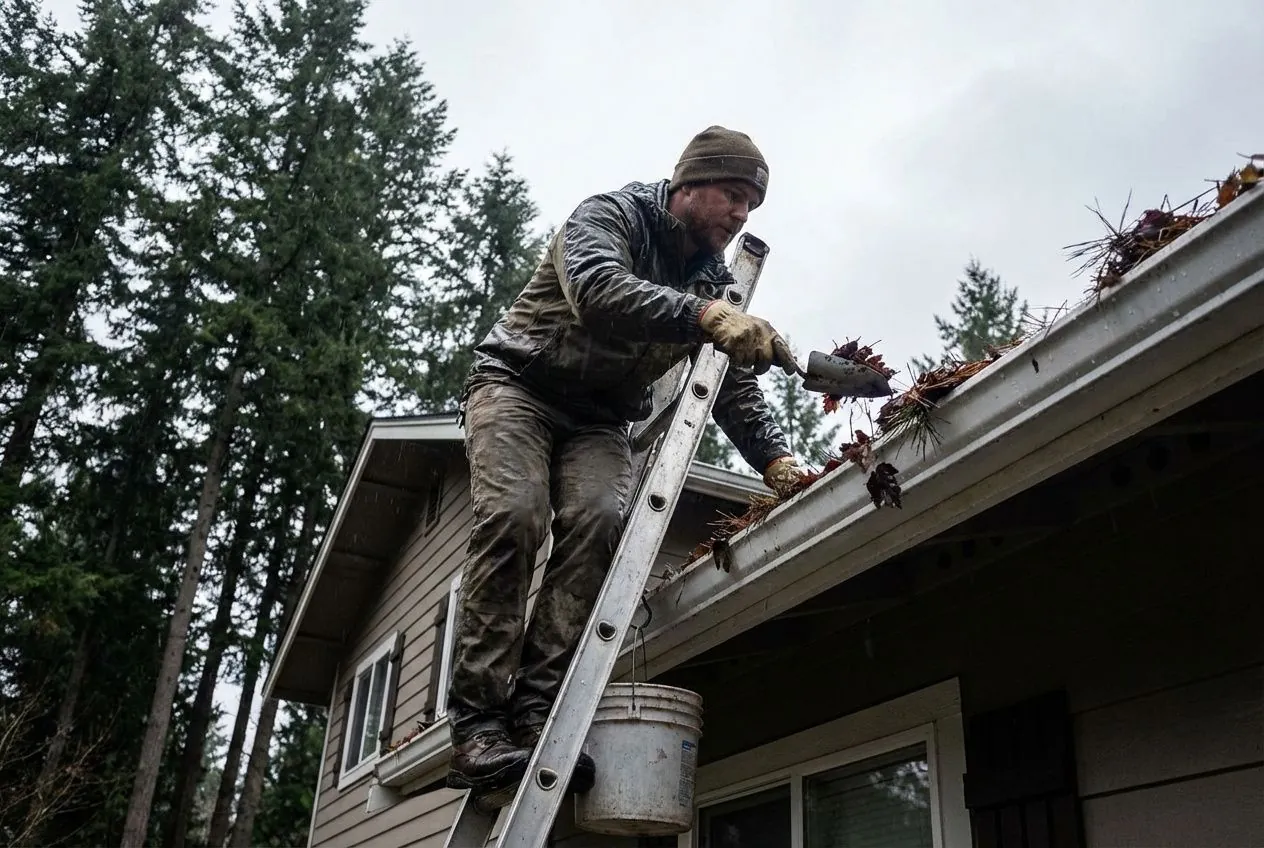
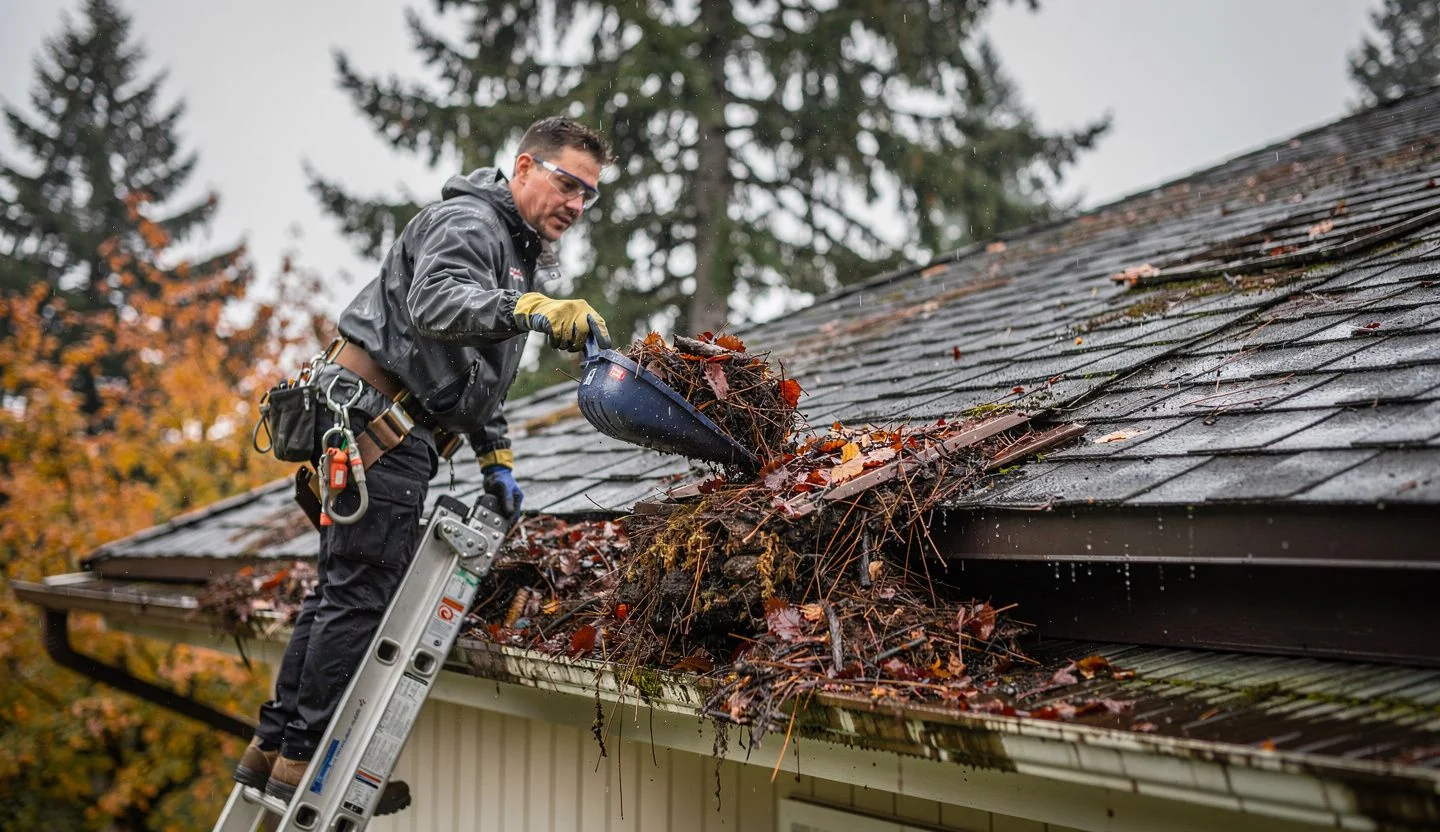
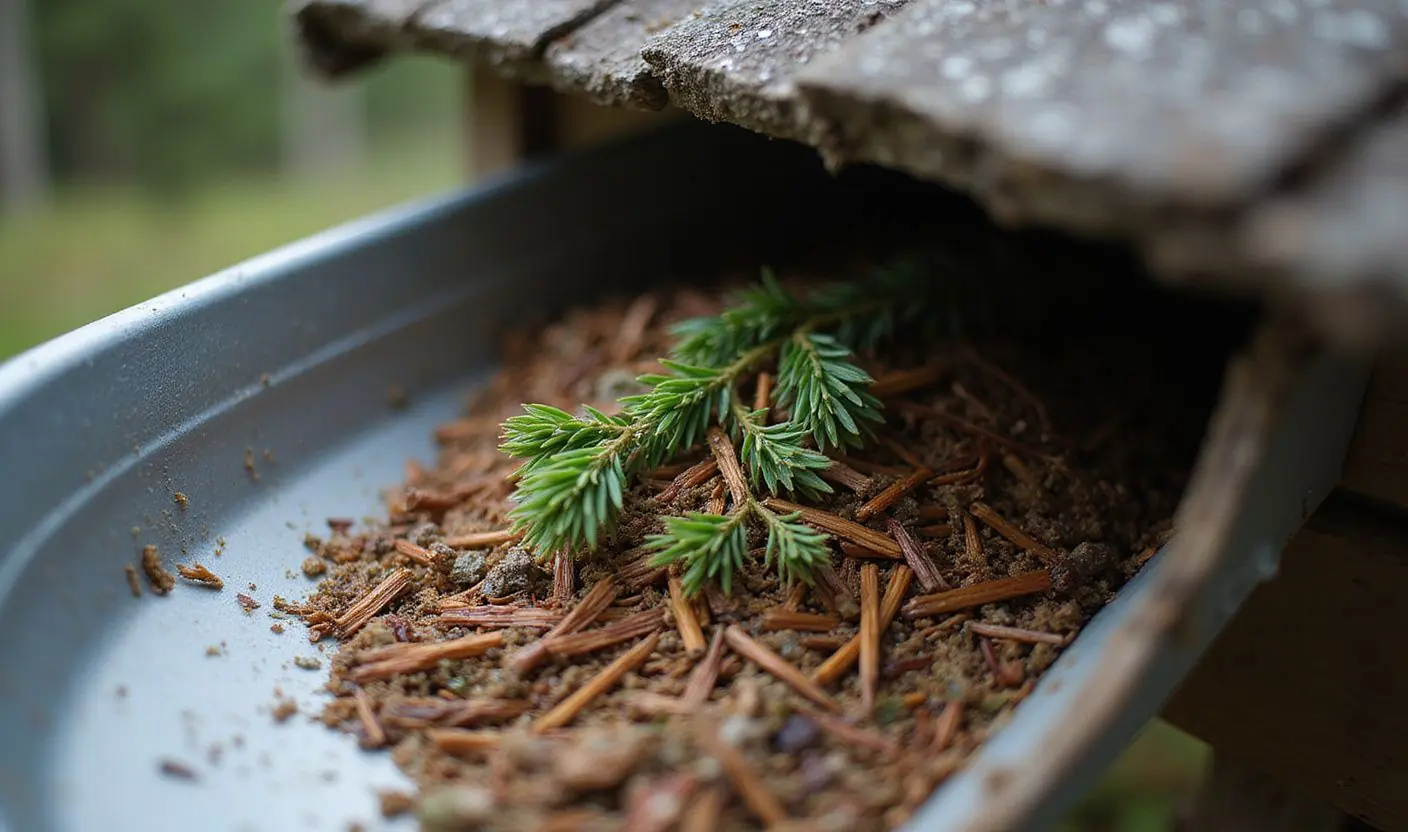
We hand-remove all debris from every gutter run: leaves, needles, moss, shingle grit, and compacted organic material. We use scoops and gloves, not leaf blowers that push debris into downspouts.
Downspout Flush
We flush every downspout with water to clear any blockages. A blocked downspout defeats the entire gutter system. We verify water flows freely from the gutter to the discharge point at ground level.
Flow Test and Inspection
We run water through the cleaned system to check for proper drainage slope, leaking joints, and any areas where water pools instead of flowing. This catches problems before the heavy rains hit.
Minor Repairs and Report
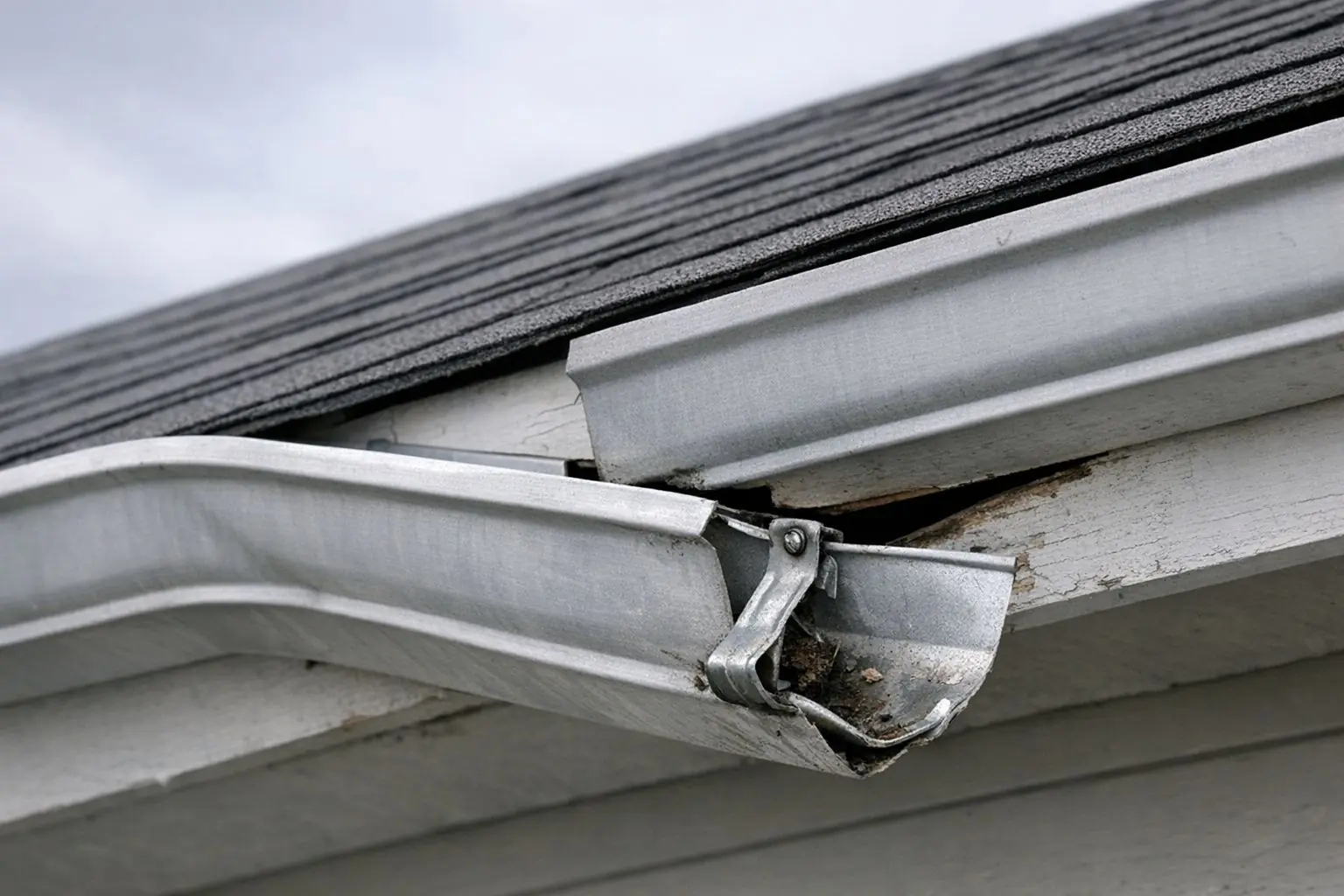
During cleaning, we tighten loose hangers, reseal small leaks, and note anything that needs more attention. You get a verbal report of what we found and what we recommend, with no pressure.
What Happens When Gutters Are Not Cleaned
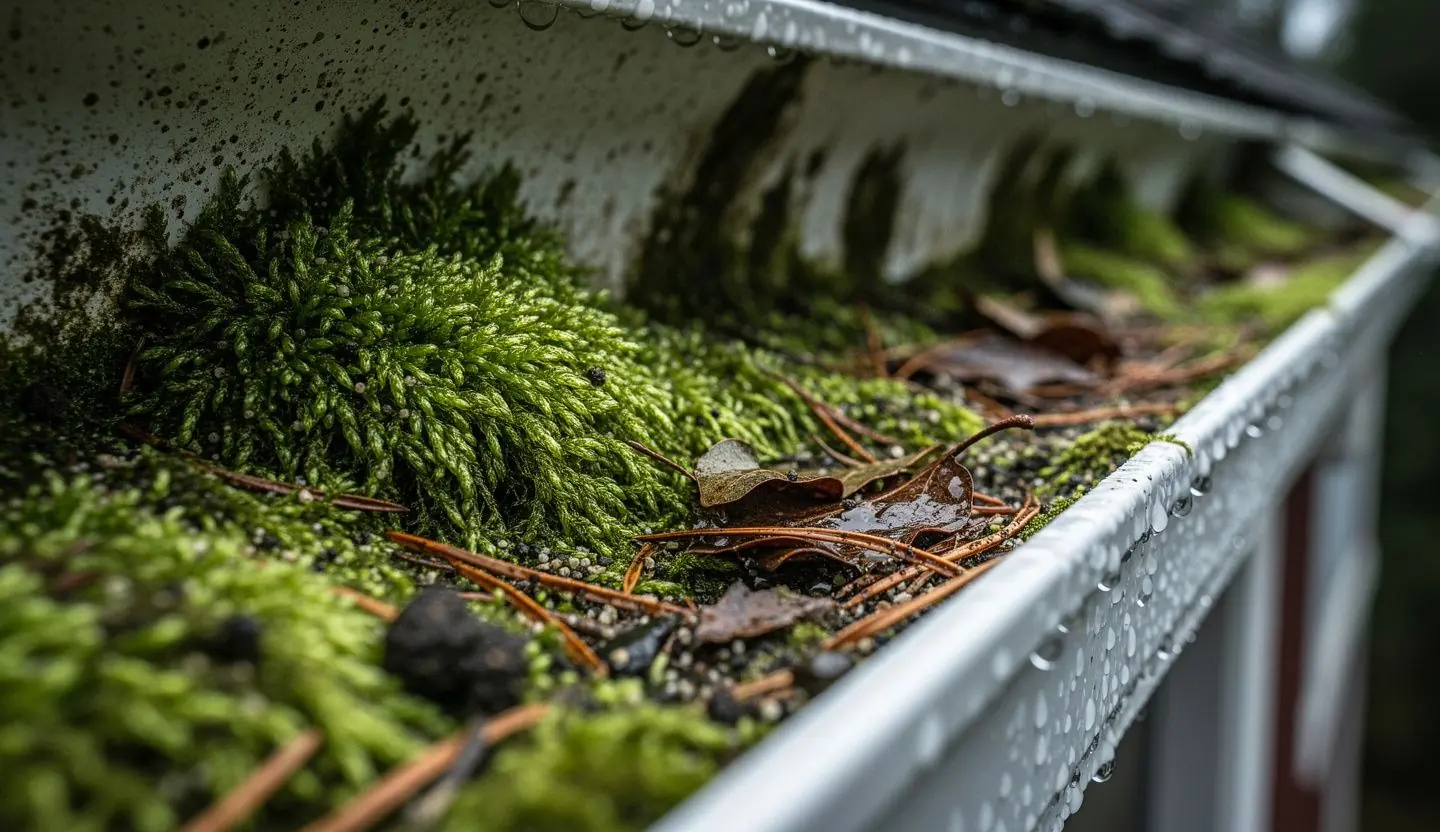
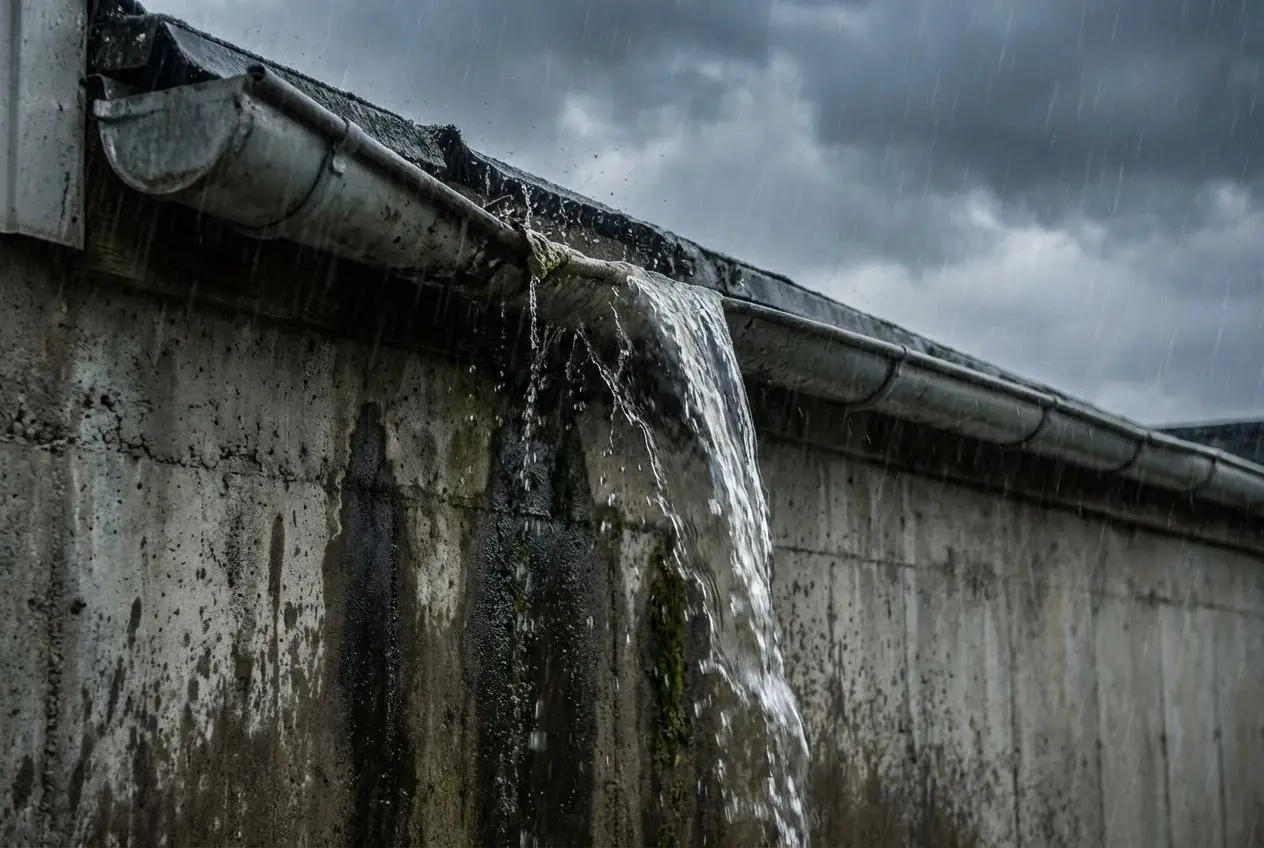
Clogged gutters are not just a cosmetic problem. The water has to go somewhere, and when the gutter is full of debris, it goes where you do not want it.
Foundation damage: Overflow concentrates water against the foundation instead of routing it away. Over time this causes settling, cracks, and moisture intrusion into crawl spaces and basements.
Fascia and soffit rot: Standing water behind the gutter trough saturates the fascia board. Wood fascia in Douglas County's wet climate can go from stained to rotted in a single winter if water sits against it.
Roof damage: Water backing up under shingles at the gutter edge causes ice dams in winter and shingle deterioration year-round.
Mosquitoes and mold: Standing water in gutters creates breeding habitat for mosquitoes and conditions for mold growth on exterior walls.
How Often Should Gutters Be Cleaned in Douglas County?
Minimum twice per year: once in late spring after the pollen and seed drop, and once in late fall after the leaves and needles have come down but before the heavy winter rains start in November.
Three to four times per year for homes with heavy tree coverage, adjacent fir or pine stands, or oak canopy directly over the roofline. Properties along the North and South Umpqua rivers, in Glide, and in the heavily forested neighborhoods of Myrtle Creek and Canyonville typically need more frequent cleaning.
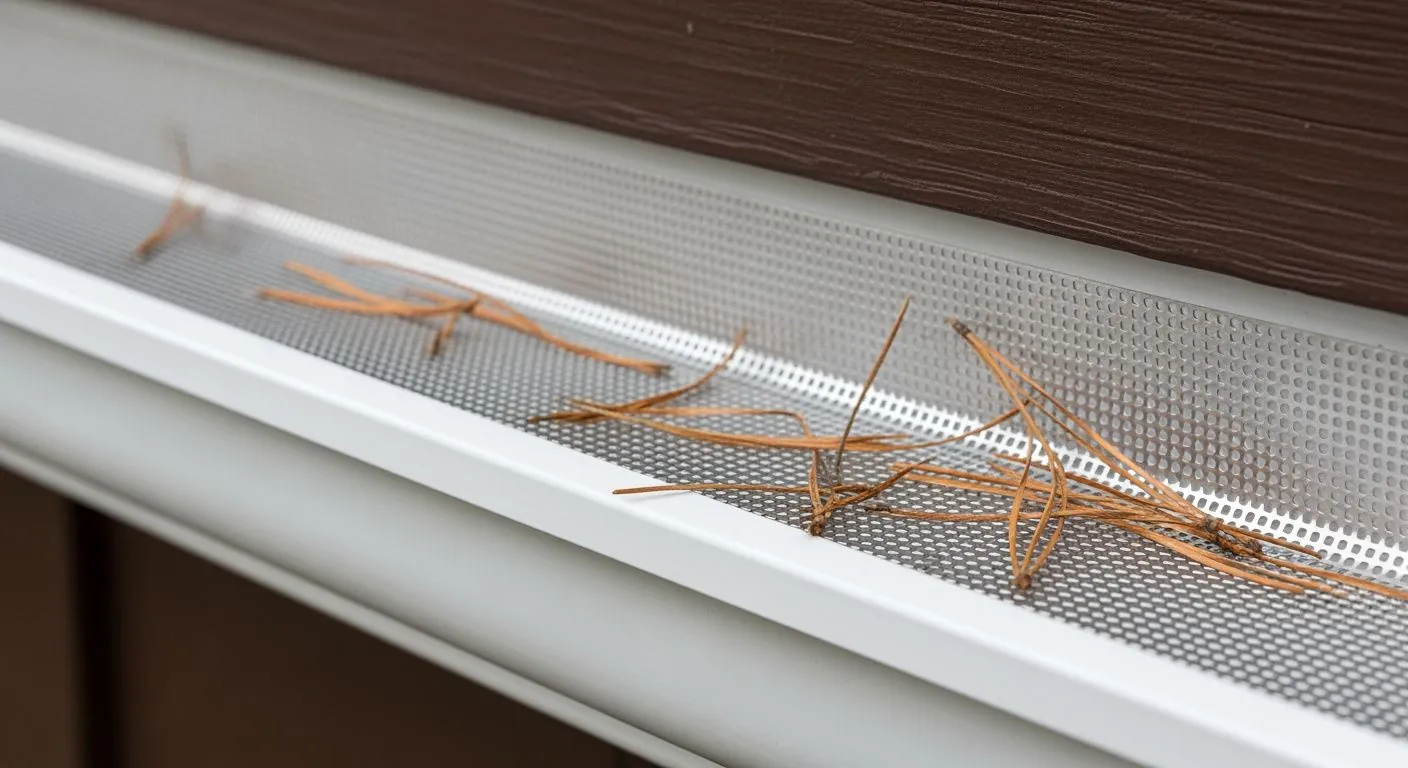
With micro-mesh gutter guards: cleaning frequency drops to once per year in most cases. The guards block debris from entering the trough, but they still need annual inspection to clear surface buildup and check for moss growth on top of the mesh.