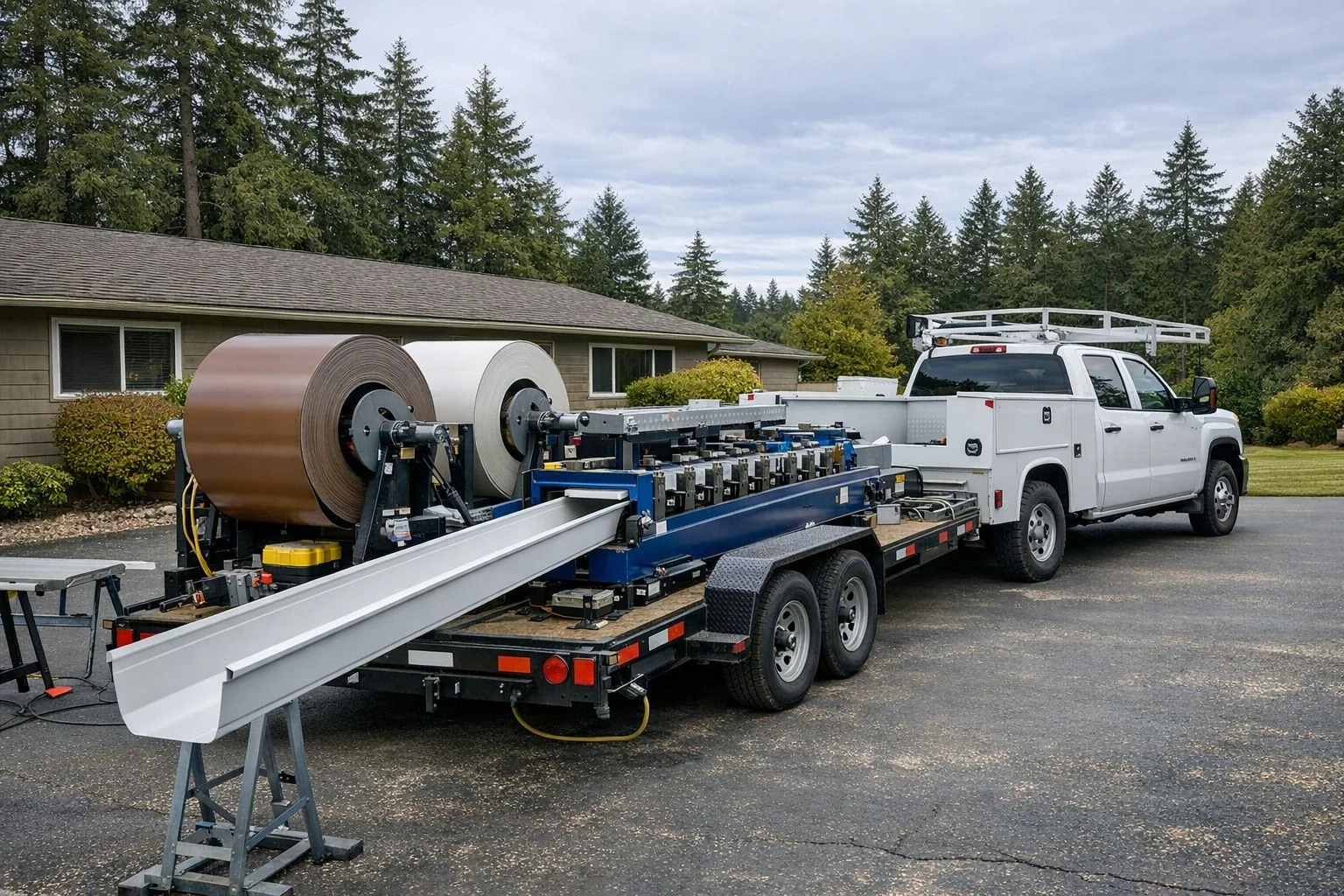
Our Installation Process
Every gutter installation follows the same five steps. No shortcuts. No guesswork. We have been doing this since 1974 and the process has been refined over thousands of Douglas County homes.
Free On-Site Estimate
We visit your property, measure the roofline, assess the roof pitch and drainage patterns, and check the condition of existing fascia boards. You get a written estimate with exact details before any work begins.
Precision Measurement
On installation day, we take final measurements of every run, corner, and downspout location. These measurements feed directly into the gutter machine. Every piece is cut to the exact length your home requires.
On-Site Fabrication
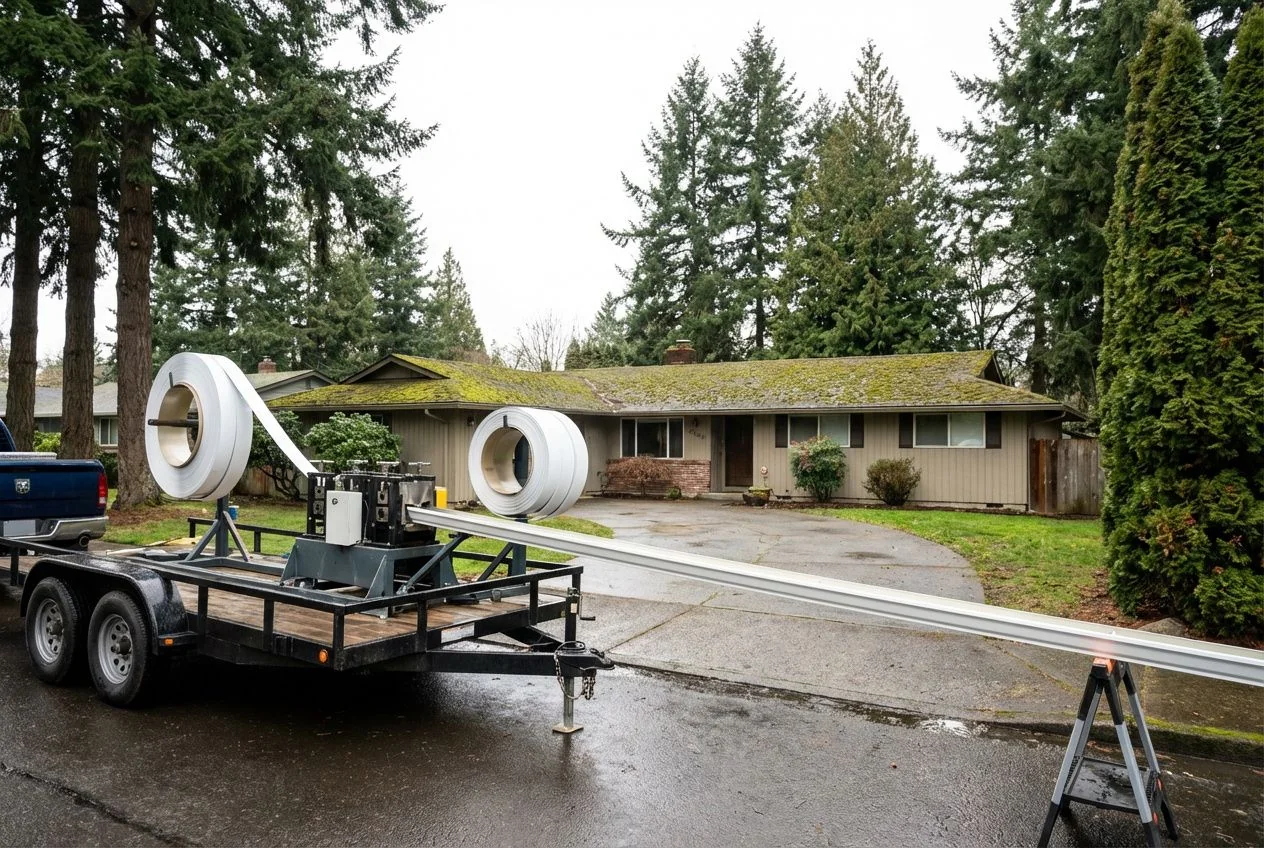
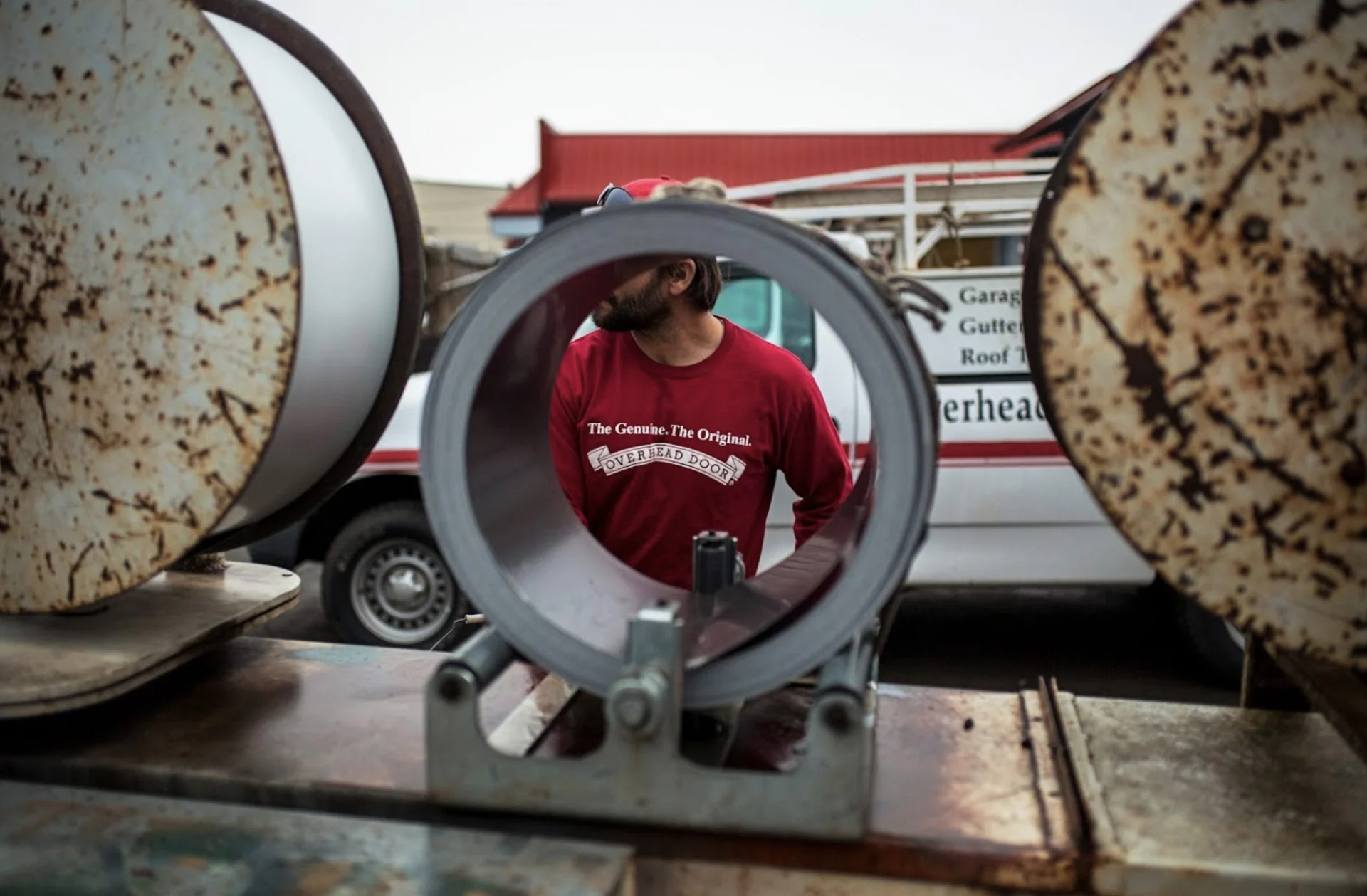
We bring our portable gutter machine to your property and fabricate each seamless piece right in your driveway. The aluminum coil runs through the machine and comes out as a finished gutter in the color you chose. Everything is custom.
Professional Installation
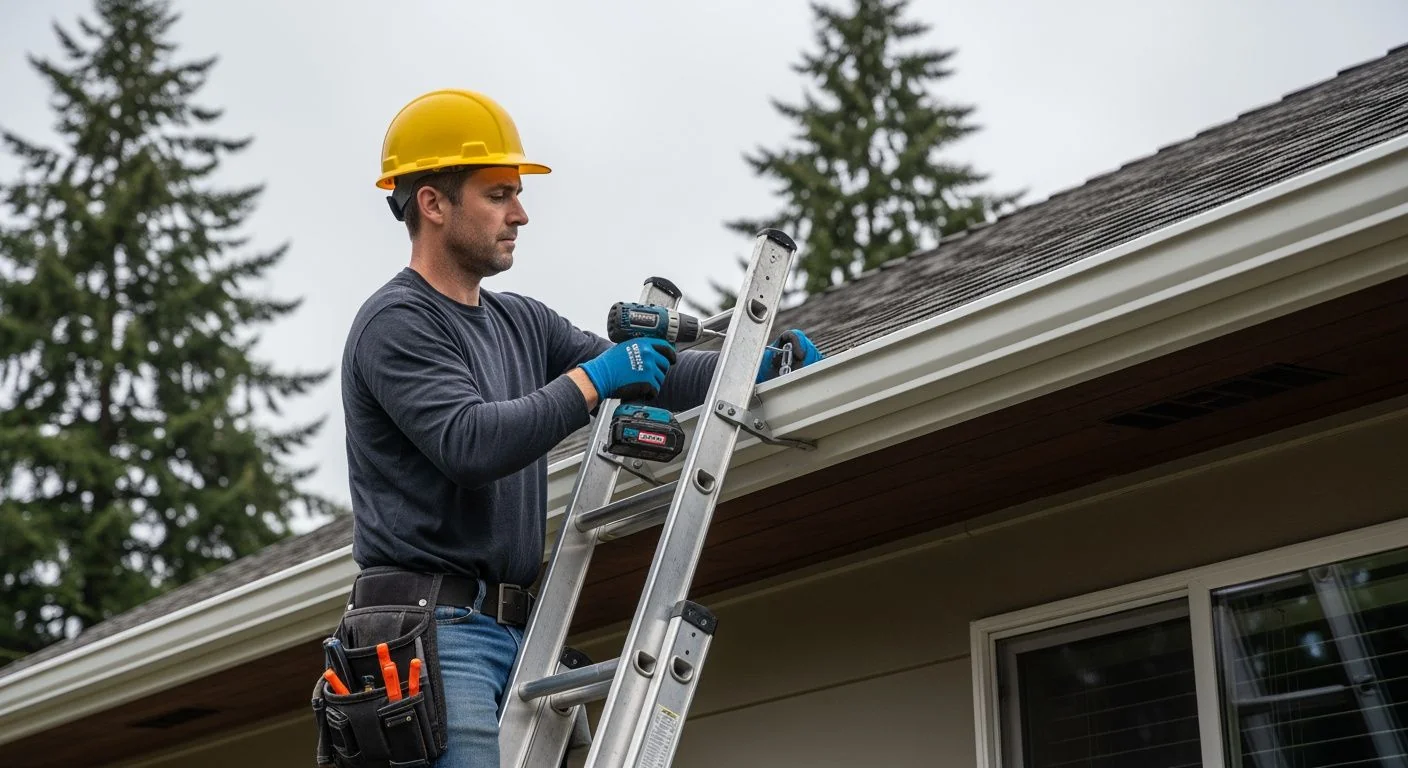
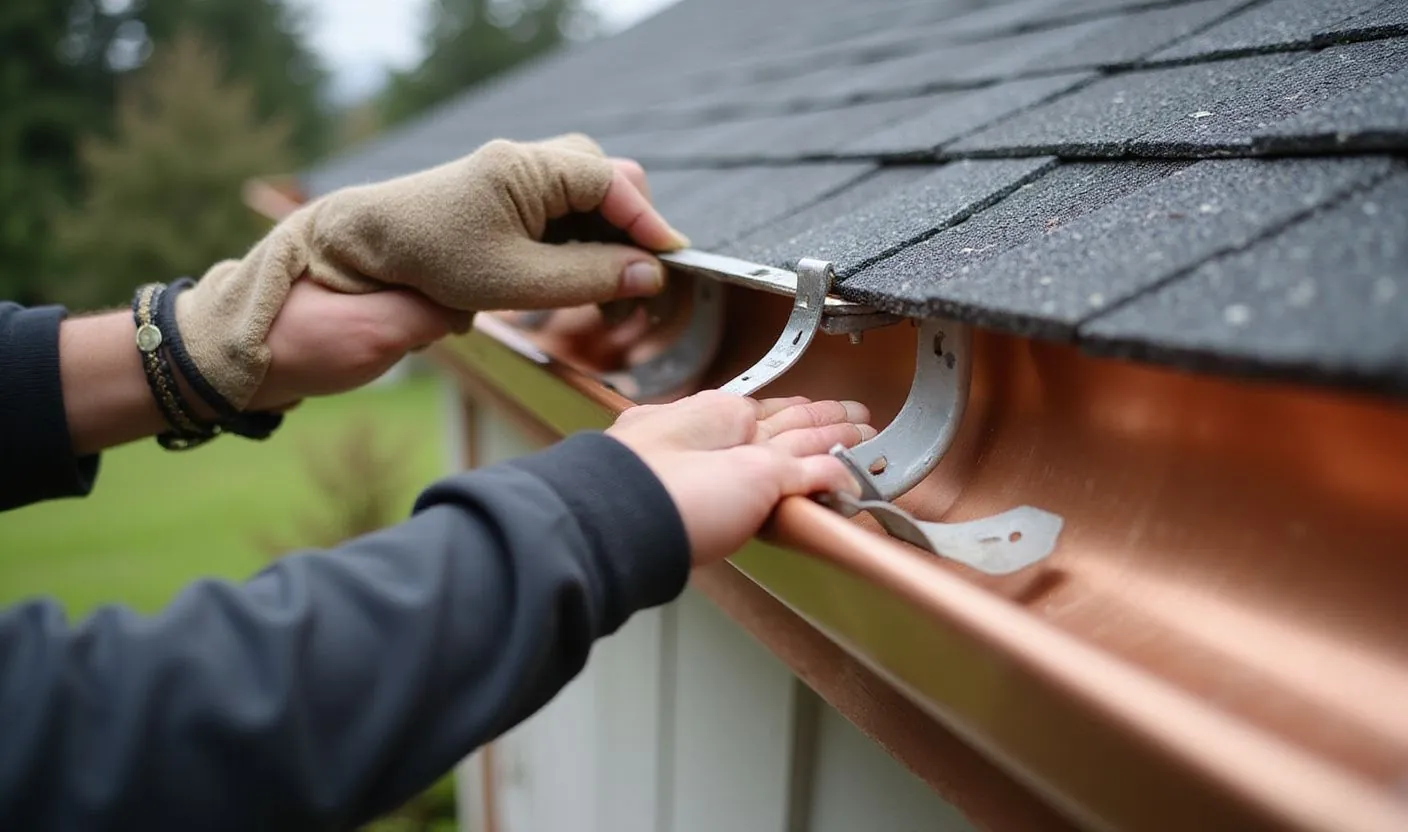
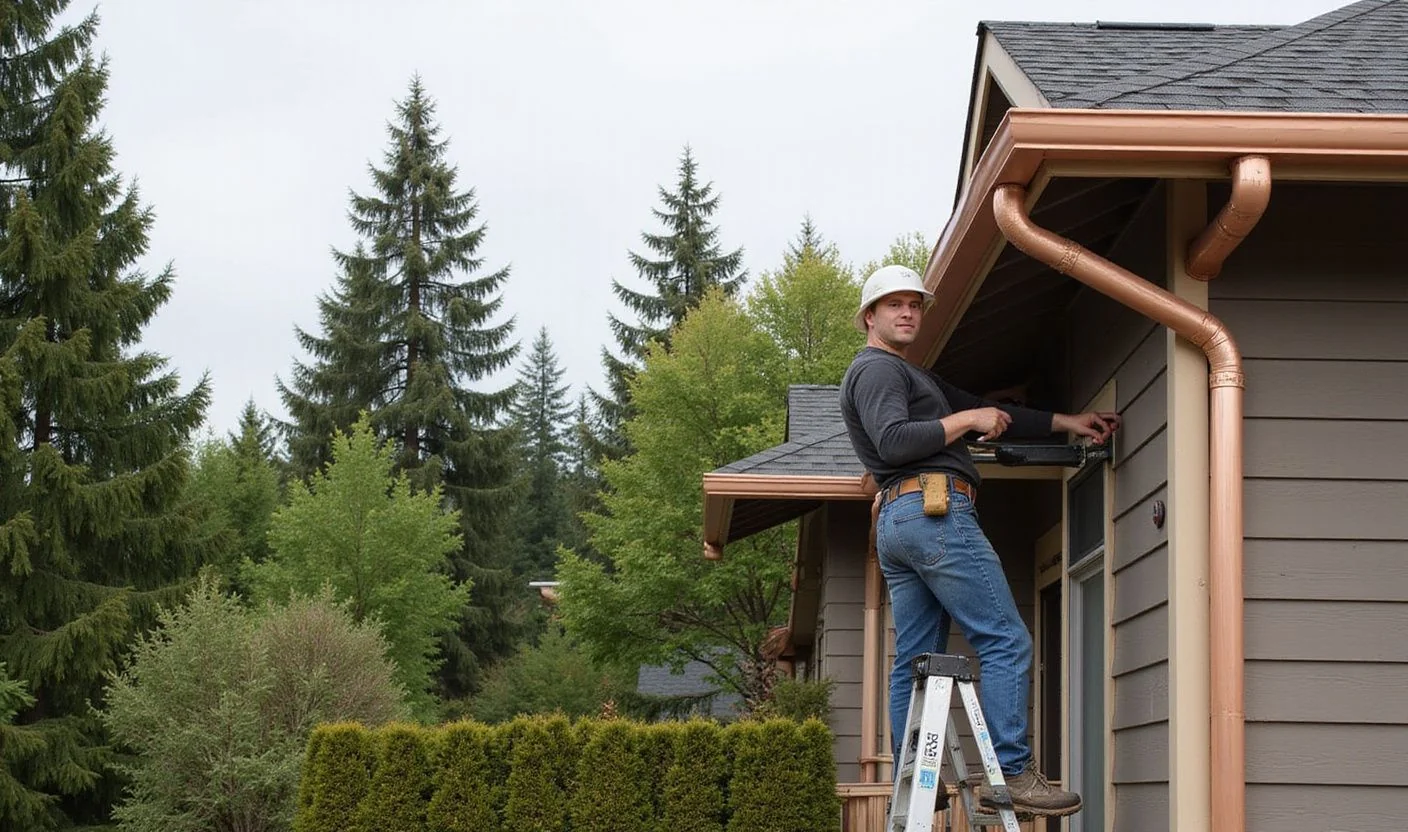
We mount the gutters using hidden hangers screwed into the fascia every 24 inches. Hidden hangers are stronger than spike-and-ferrule systems and provide a cleaner look. Every joint at corners and downspouts is sealed with professional-grade sealant.
Cleanup and Walkthrough
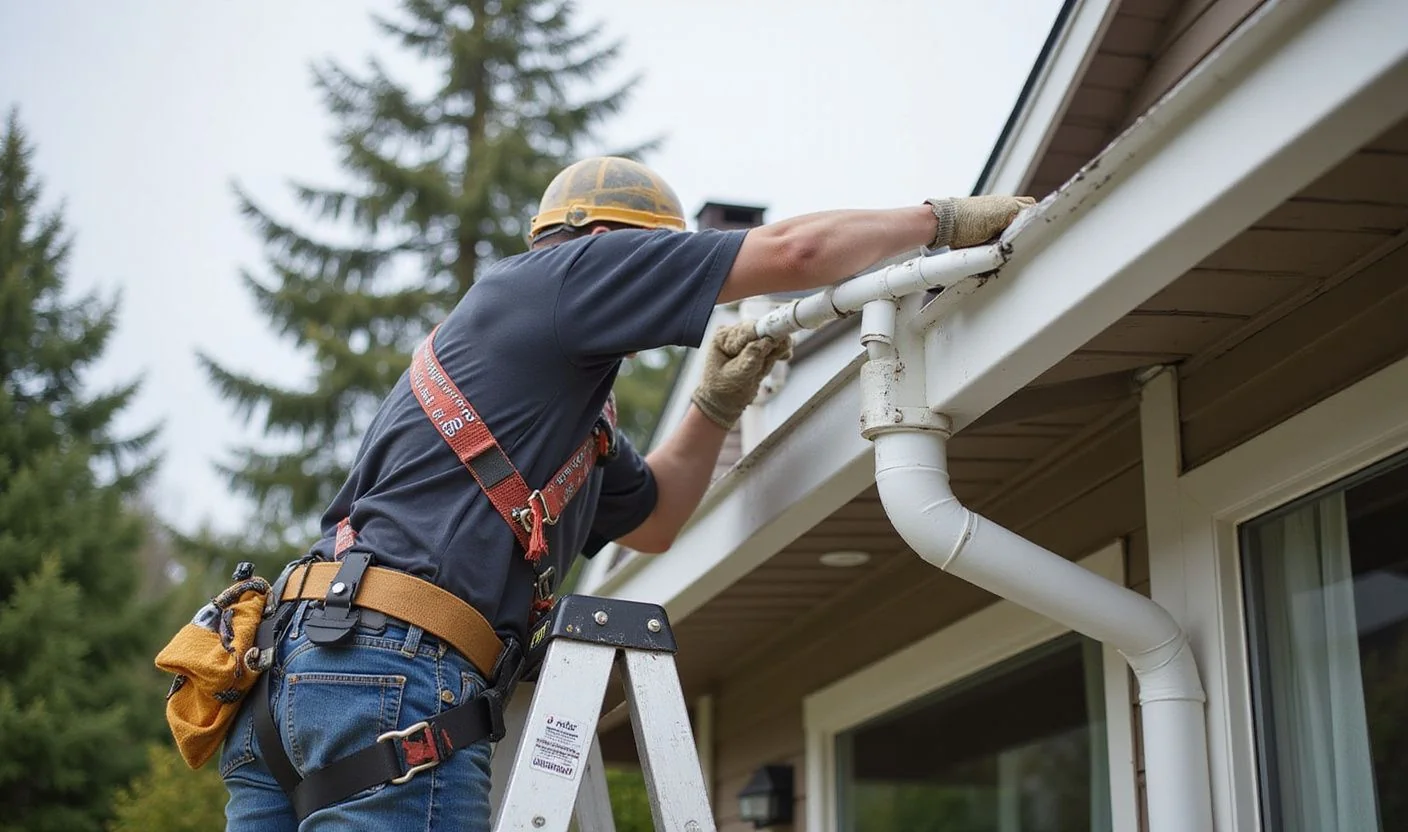
We remove all old gutters, clean up all scrap material, and walk you through the finished installation. We point out downspout locations, explain maintenance basics, and answer any questions before we leave.
Gutter Sizing: 5-Inch vs. 6-Inch K-Style
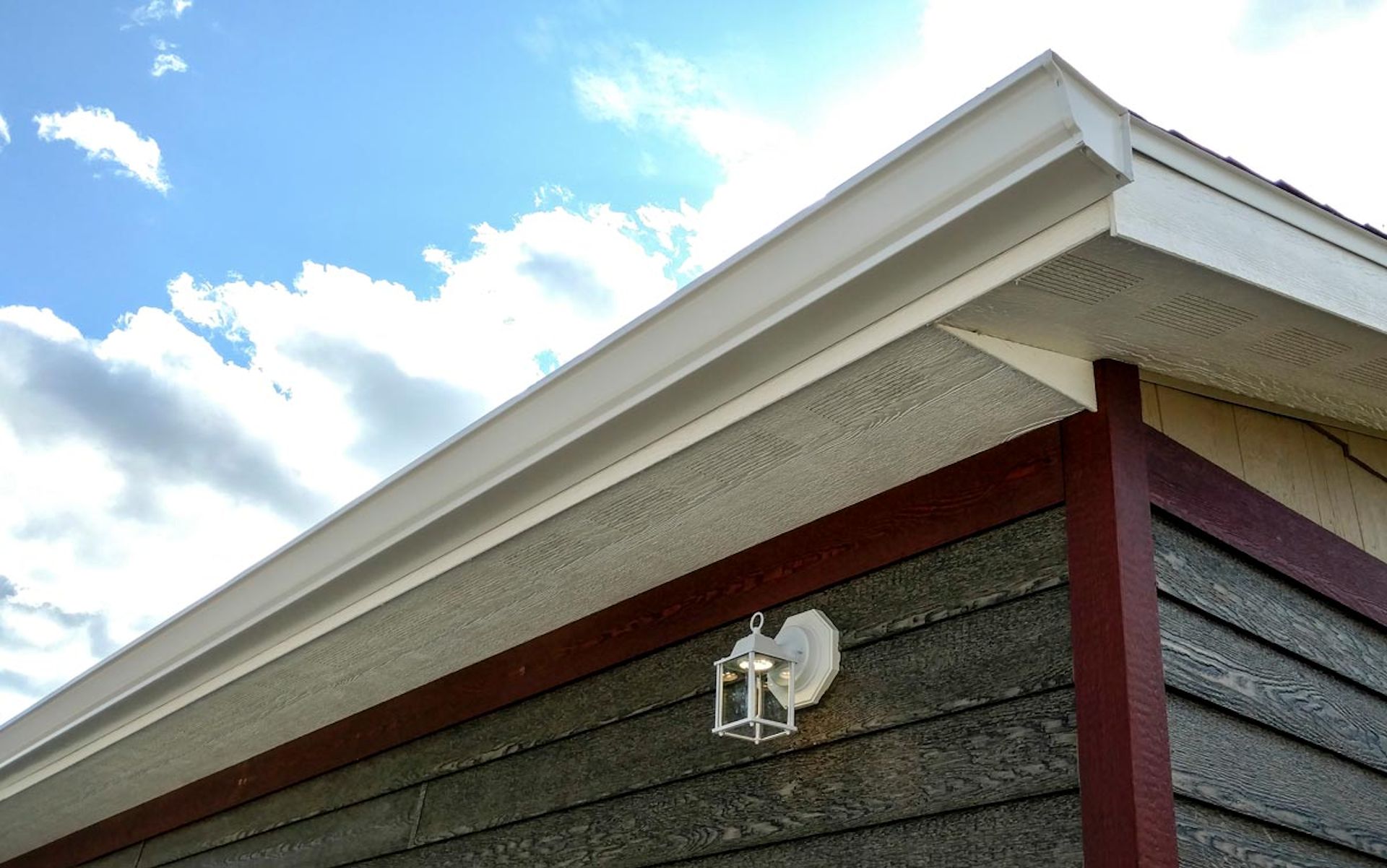
K-style gutters have a flat front and a decorative profile that looks like crown molding from the ground. This is the standard residential gutter shape across Douglas County and most of the Pacific Northwest.
5-inch gutters handle most single-story homes with standard roof pitches. They move about 1.2 gallons of water per second, which is enough for roofs up to roughly 5,500 square feet of drainage area in Douglas County rainfall conditions.
6-inch gutters move about 40% more water. They are the right choice for homes with steep roof pitches, large roof areas, multiple roof valleys that concentrate runoff, or heavy tree coverage. Many two-story homes in Douglas County benefit from 6-inch gutters.
During your free estimate, we calculate the drainage area for every run of your roofline and match the gutter size to the actual water volume your home needs to handle. Undersized gutters overflow during heavy rain, which is the primary cause of fascia rot and foundation moisture problems we see across Douglas County.
Gutter Guards
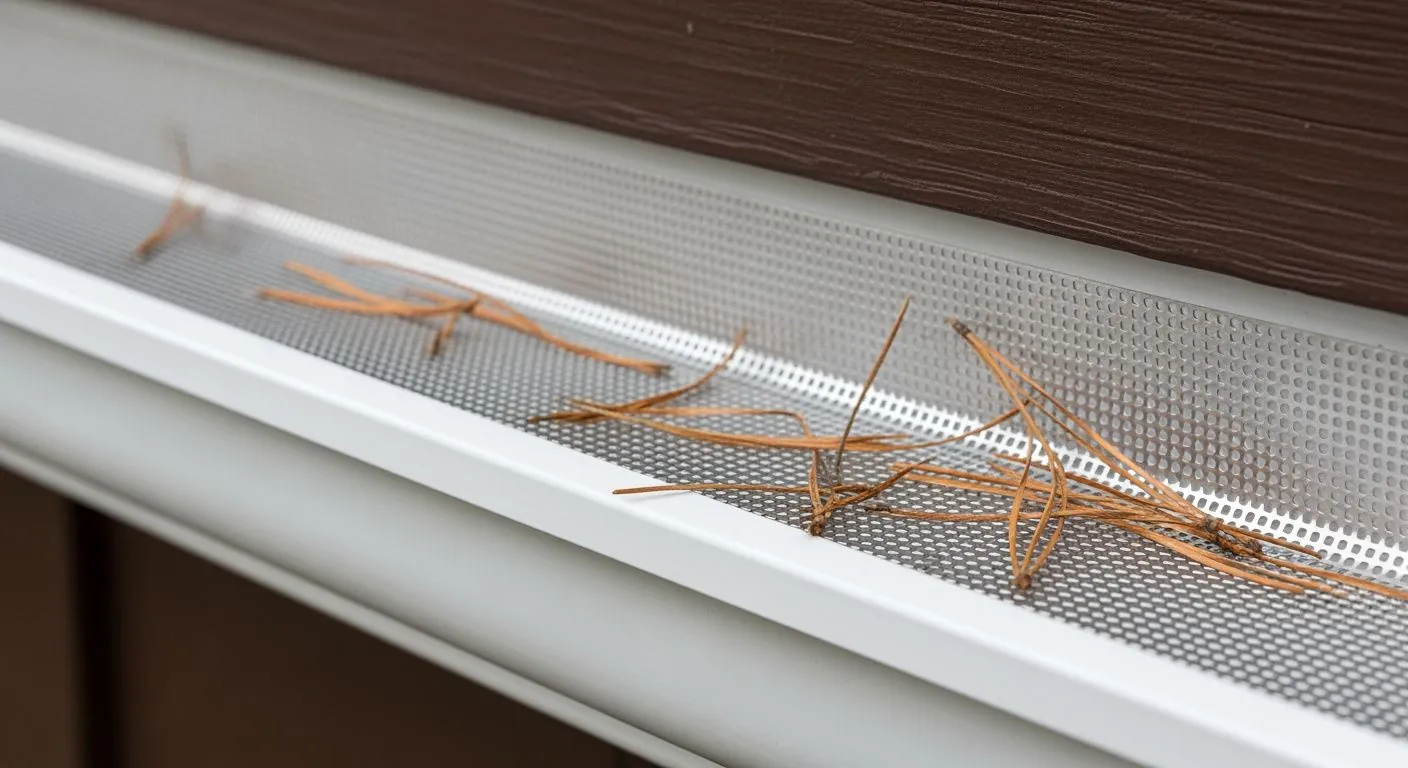
Douglas County has heavy debris loads from Douglas fir needles, oak leaves, and moss. Without protection, gutters in this area typically need cleaning twice a year. Micro-mesh gutter guards reduce that to once every two to three years in most cases.
We install micro-mesh guards that let water through while blocking needles, leaves, and debris. They are fitted during installation or added to existing gutters. We will tell you honestly whether guards make sense for your specific home and tree situation.
Homes along the Umpqua river corridors, in Glide, and in the oak-heavy neighborhoods of Myrtle Creek and Canyonville typically see the heaviest debris loads. If your gutters are pulling away from the fascia from accumulated debris weight, guards combined with a full re-installation may be the most effective fix.