
Types of Gutter Guards
Not all gutter guards perform the same. The type that works in a broadleaf neighborhood in the Midwest will fail under Douglas County's mix of fine fir needles, heavy moss, and sustained rain. Here is how each type performs in our climate.
Micro-Mesh Guards
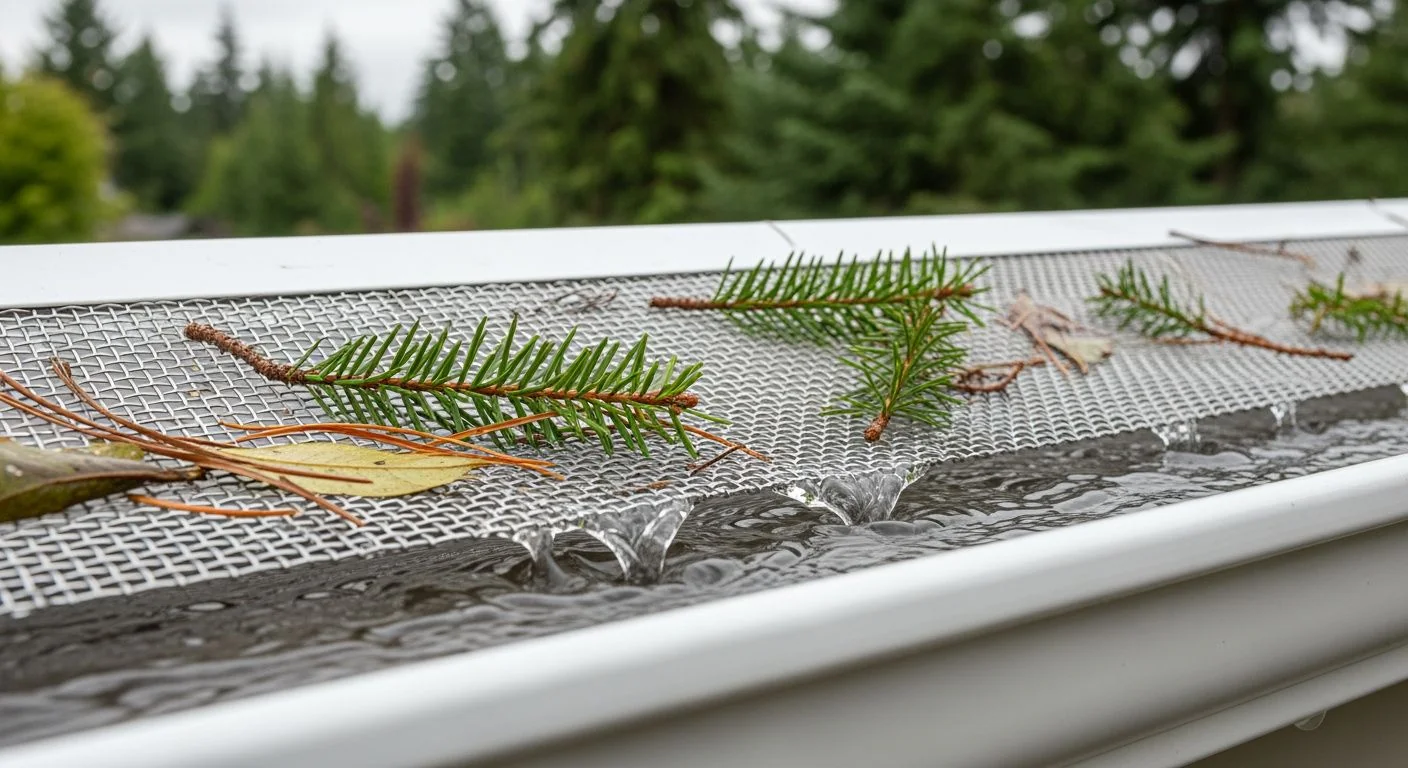
Best for Douglas County. Fine stainless steel mesh blocks even small fir needles while allowing water through at high flow rates. Surface tension pulls rainwater through the mesh while debris sits on top and blows or washes off. Requires annual inspection and occasional top-surface cleaning. This is what we install and recommend for most homes in Douglas County.
Reverse Curve (Surface Tension)
Water follows the curved surface into the gutter while leaves slide off the front. Fair performance with broadleaf debris. Poor with fir needles because small needles follow the water curve into the trough. Not recommended for homes near conifer stands.
Screen Guards
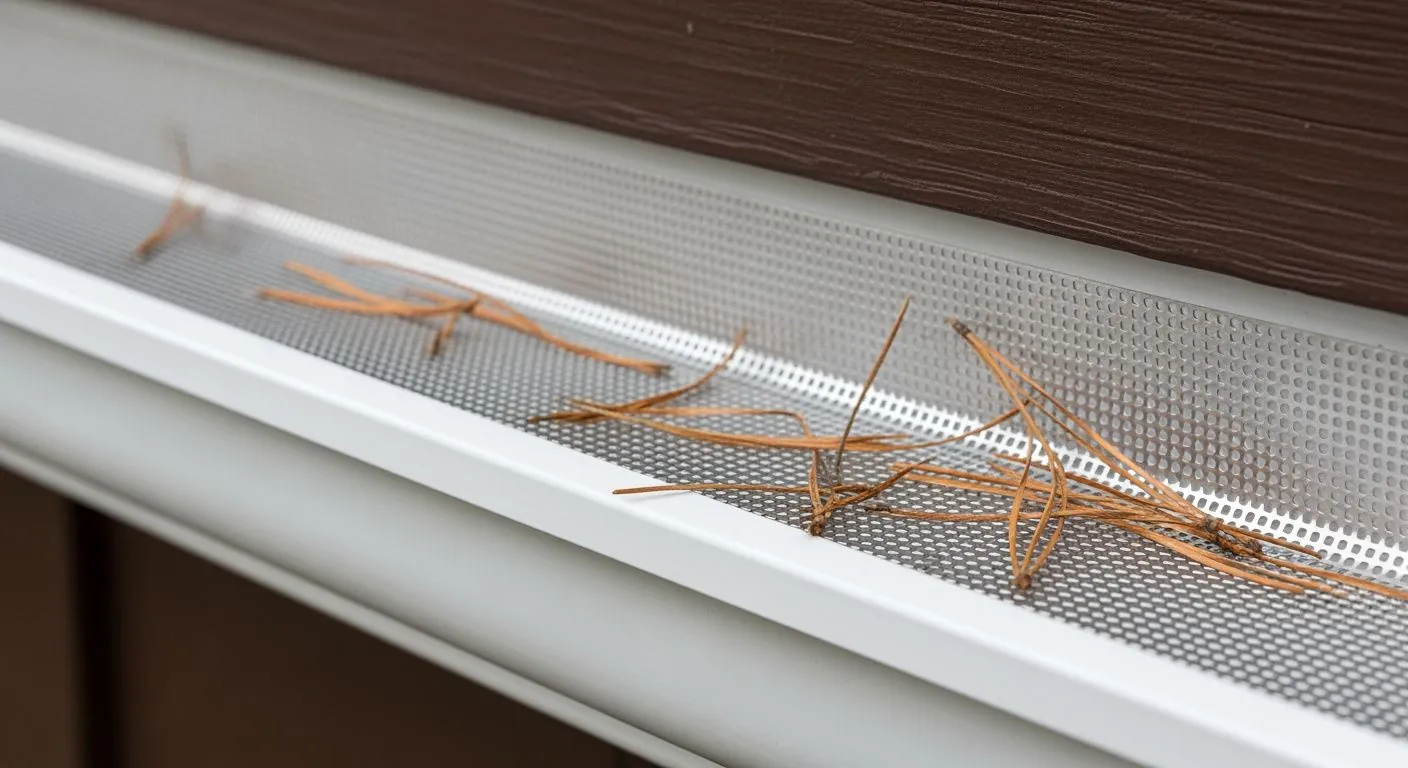
Perforated metal or plastic screens placed over the gutter opening. Block large leaves effectively. Fail with Douglas fir needles because the needles pass straight through the screen openings. Not effective in most Douglas County applications.
Foam and Brush Inserts
Foam wedges or brush bristles that sit inside the gutter trough. Budget options that deteriorate quickly in Oregon's wet climate. Foam traps moisture and promotes mold growth. Brush bristles trap needles and become harder to clean than an open gutter. We do not install or recommend these.
Why We Recommend Micro-Mesh
Micro-mesh gutter guards use a fine stainless steel screen with openings small enough to block Douglas fir needles, pine needles, roof granules, and even maple seed pods. The mesh is supported by an aluminum frame that sits over or clips onto the gutter lip.
In Douglas County's climate, the key advantage is needle filtration. Standard screens have openings large enough for fir needles to pass through. Micro-mesh openings are typically 50 to 100 microns, which is fine enough to block everything except water. Debris sits on the surface and dries, then blows off or washes to the edge during the next rain.
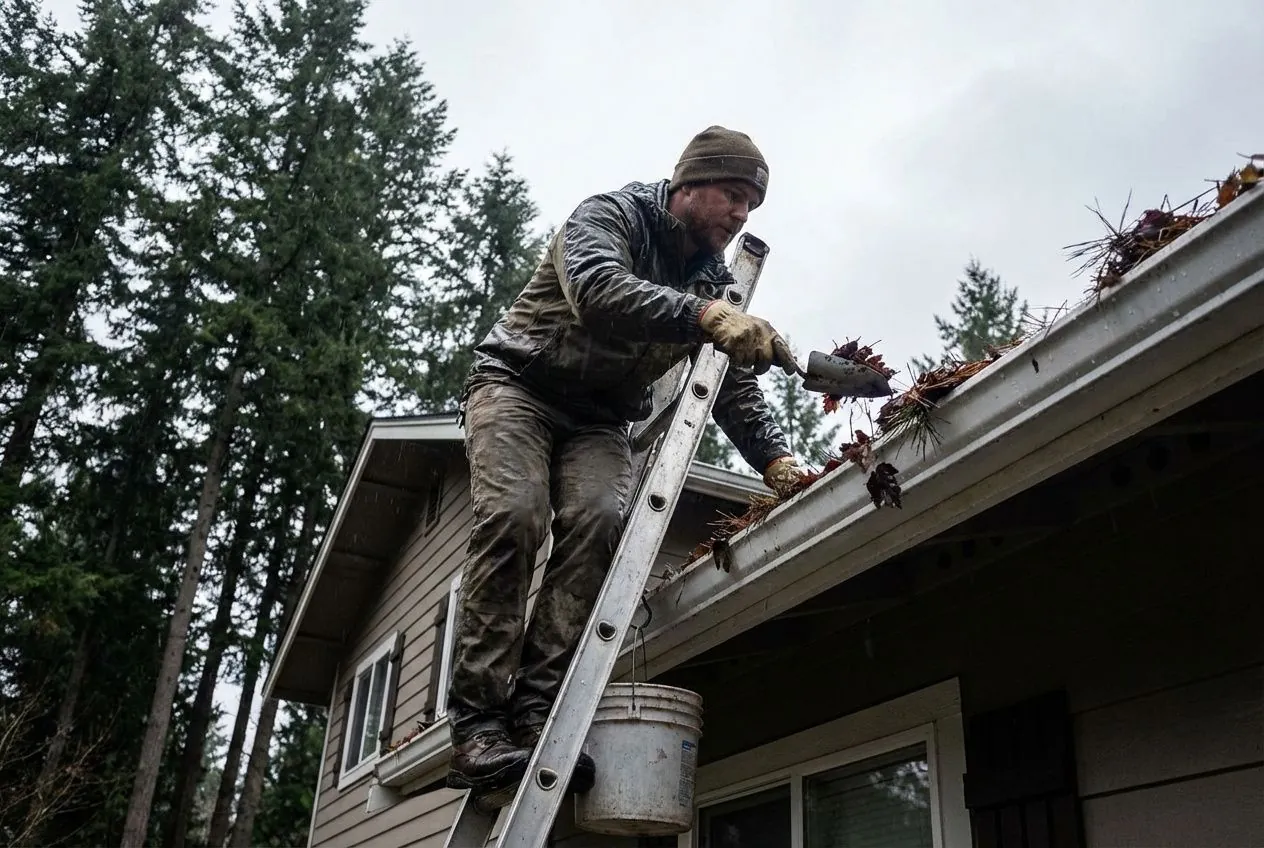
Homes in Glide, Myrtle Creek, and Canyonville see the heaviest debris loads because of dense fir and pine stands immediately adjacent to rooflines. These are the properties where micro-mesh provides the most dramatic reduction in maintenance. Without guards, these homes may need gutter cleaning three or four times per year. With micro-mesh, once every two to three years is typical.
Micro-mesh guards also help prevent ice dam formation during Douglas County's winter freeze-thaw cycles. By keeping debris out of the gutter, water flows freely instead of pooling behind debris dams and freezing. This is especially relevant at higher elevations around Glide, Days Creek, and Canyonville.
We install micro-mesh guards with new gutter installations and as a retrofit to existing gutters. When retrofitting, we inspect the existing gutters, clean them thoroughly, make any necessary repairs, and then fit the guards. Installing guards over damaged or misaligned gutters defeats the purpose.
Our Guard Installation Process
Whether you are adding guards to new gutters or retrofitting existing ones, the process follows the same careful steps.
Inspection and Assessment
We inspect your existing gutters for proper slope, hanger condition, fascia integrity, and any damage. Guards installed over failing gutters will not perform correctly. If repairs are needed, we address them first.
Complete Cleaning
We remove all debris from gutters and downspouts. We flush every downspout to verify clear flow. Any moss or buildup on the gutter interior is scrubbed clean. Guards go onto clean gutters only.
Guard Fitting
Micro-mesh panels are cut to length and secured to the gutter lip and under the first row of shingles. Every section is locked tight with no gaps at seams. We pay special attention to corners, valleys, and end caps where debris tends to accumulate.
Water Test and Cleanup
We run water across the guards to verify flow rate and confirm no bypass. We check that water enters the gutter at full volume without sheeting over the edge. All debris and packaging is cleaned up before we leave.
Guard Maintenance
No gutter guard system is maintenance-free. Any company that claims otherwise is not being honest. What guards do is dramatically reduce the frequency and effort of maintenance.
With micro-mesh guards in Douglas County, plan on an annual visual inspection. Check that debris is not accumulating on the mesh surface, that no sections have shifted, and that water is flowing cleanly into the gutter during rain. Most years, the mesh is self-cleaning because dried debris blows off or washes to the edge.
Homes with aggressive moss growth on the roof may see moss creeping onto the guard surface. This can be removed with a soft brush or low-pressure rinse. Addressing roof moss with zinc strips or professional treatment reduces this issue significantly.
If moss or accumulated debris does build up on the mesh, it is far easier to clean the flat surface of a guard than to scoop decomposing material out of an open gutter trough. That is the real value: maintenance goes from messy and frequent to quick and occasional.